
Gross Motor Milestones: When to See a Paediatric Physiotherapist
The first time your child rolls over, pulls themselves up, or takes those wobbly first steps – those moments are gross motor milestones, and they're about far more than movement. They're the foundation for confidence, independence, and physical wellbeing that your child will build on for life.
Most children reach these milestones without any support. But for some kids, a little extra help from a paediatric physiotherapist makes all the difference. The earlier that support begins, the better the outcome tends to be.
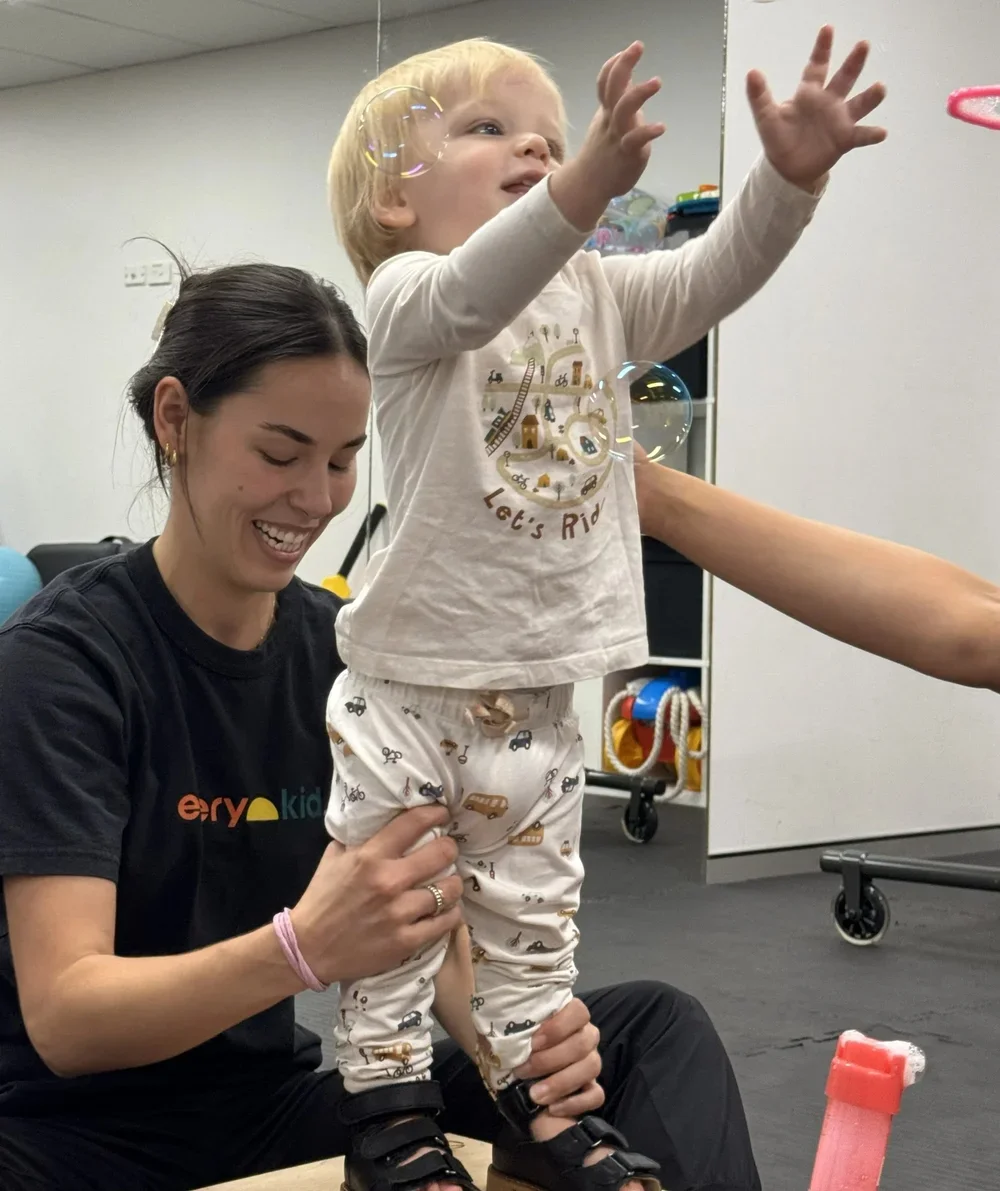
What are Gross Motor Milestones?
Gross motor skills are the big whole body movements – rolling, sitting, crawling, standing, walking, running, jumping. They develop in sequence, with each skill building on the last.
The milestones below give a general guide to timing. Every child develops at their own pace, and the windows are wider than most parents realise.
What matters isn't hitting each milestone on a specific date, it's that the sequence is progressing.
A Quick Snapshot by Age
Every child develops at their own pace, and there's natural variation in timing. Here's a general guide to what paediatric physiotherapists look at across the early years.
0–6 months
Lifts head when placed on tummy (by 3–4 months)
Rolls from tummy to back (by 4–5 months)
Sits with support (by 6 months)
6–12 months
Sits without support (by 8–9 months)
Starts crawling or shuffling to move (by 9–10 months)
Pulls to stand and cruises along furniture (by 12 months)
12–18 months
Takes first steps (most children walk independently by 14–15 months, with 18 months the outer end of typical range)
Can stand briefly without holding on
18 months–3 years
Runs (though falls are normal)
Walks up stairs with support
Kicks a ball, jumps with two feet
3–5 years
Hops on one foot
Climbs playground equipment
Catches a ball, rides a bike with training wheels
Signs it Might be Time to See a Physio for Kids
You don't need a diagnosis to book an assessment. You don't need to be certain something's wrong. If something feels off, that instinct is worth following up – and a good paediatric physiotherapist will always tell you honestly if there's nothing to be concerned about.
These are the signs that point toward checking in with a physio for kids sooner rather than later:
Not rolling by 6 months
Not sitting independently by 9 months
No crawling or floor mobility by 12 months
Not walking by 18 months
Falling significantly more than other children the same age
Persistent toe walking past age 2
One side of the body noticeably stronger or more coordinated than the other
Feeling "floppy" or struggling to hold positions
A GP, paediatrician, or maternal health nurse has recommended a physio assessment
Any one of these is worth a conversation. You know your child best.
What Does a Paediatric Physiotherapist Actually Do?
A paediatric physiotherapy assessment looks at your child's posture, strength, movement quality, balance, coordination, and how they're progressing relative to their age. It's usually done through play. Your child doesn't need to "do anything" in a formal sense.
From there, your physio will:
Give you a clear picture of where your child is at
Identify any areas of delay or concern
Create a therapy plan tailored to your child's goals
Show you strategies and activities to support development at home
At EveryKid, our physios work as part of a multidisciplinary team. If there are sensory or motor elements that cross into occupational therapy for kids – like toe walking with sensory drivers, or coordination issues affecting play and self care – we work across disciplines to make sure nothing gets missed.
Why Earlier Is Better for Gross Motor Development
The brain is most adaptable in the early years. When delays in gross motor milestones are identified and supported early, children make faster progress – and they carry that physical confidence with them into school, sport, and everyday life.
An assessment is a starting point. And the sooner you have that starting point, the more you can do with it.
Interested in a Physiotherapy Assessment?
Our paediatric physio team in Parramatta sees babies, toddlers, school-age kids, and teens.
No referral needed. Just get in touch with our friendly admin team on 0404 939 490 or book online here.