
What Does a Paediatric Occupational Therapist Do? A Parent's Guide
Getting dressed. Holding a pencil. Sitting still long enough to eat breakfast. These are the kinds of things most of us do without thinking. But for some children, everyday tasks like these are genuinely hard work.
That's exactly where a paediatric occupational therapist comes in. And if you've been told your child might benefit from occupational therapy for kids, or you're wondering whether to seek an assessment, this guide will help you understand what OT actually involves – and whether it could help your child.
So, What Does a Paediatric Occupational Therapist Do?
The name can be confusing. Occupational therapists work with "occupations" – and for children, an occupation is anything that occupies their time and energy. Play. Learning. Getting dressed. Eating. Making friends.
A paediatric occupational therapist looks at how a child is functioning across all of these areas, identifies what's getting in the way, and works with the child and their family to build the skills and strategies that make daily life easier.
It's not about fixing your child. It's about finding the missing pieces and filling them in.
What Do Occupational Therapists Actually Work On?
Paediatric OTs support a wide range of skills and challenges. At EveryKid, our OT team works across:
Fine motor skills
Pencil grip, handwriting, scissors, doing up buttons, managing cutlery
Sensory processing
How a child takes in and responds to sensory information, from textures and sounds to movement and touch. Some children are overwhelmed by sensory input; others seek it out constantly
Emotional regulation
The ability to manage feelings, handle transitions, and recover from big emotions without becoming dysregulated
Self care and independence
Dressing, toileting, feeding, and the everyday routines that build confidence
Social skills
Turn taking, reading social cues, forming friendships
School readiness
The combination of fine motor, attention, regulation, and independence skills that children need to thrive in a classroom
Gross motor skills
Coordination, balance, and body awareness, particularly where these affect daily activities
Upper limb function
Including specialised support for children with Cerebral Palsy, using approaches like Constraint Induced Movement Therapy (CIMT) and bimanual therapy
Each child is different
OT isn't one size fits all – the goal is always to understand what's specifically getting in the way for your child, and to build a plan around that.
Signs Your Child May Benefit from Occupational Therapy
It's not always obvious when occupational therapy for kids is the right next step. Here are some of the signs worth paying attention to:
Struggles significantly with getting dressed, doing up buttons or zips, or managing cutlery
Has handwriting that's noticeably harder than peers – messy, effortful, or avoided altogether
Becomes very upset by certain textures, sounds, clothing, or foods
Seeks out constant movement, crashing, spinning, or heavy input
Finds it hard to sit at a table for meals or during structured activities
Melts down frequently, or finds it very hard to recover once upset
Avoids or becomes distressed by playground equipment, messy play, or physical contact
Struggles with transitions or routine changes
Has difficulty making or keeping friends
Has been flagged by their teacher for attention, regulation, or fine motor concerns
You don't need to be ticking every box. If one or two of these feel very familiar, it's worth having a conversation with an OT.
What Happens in an Occupational Therapy Session?
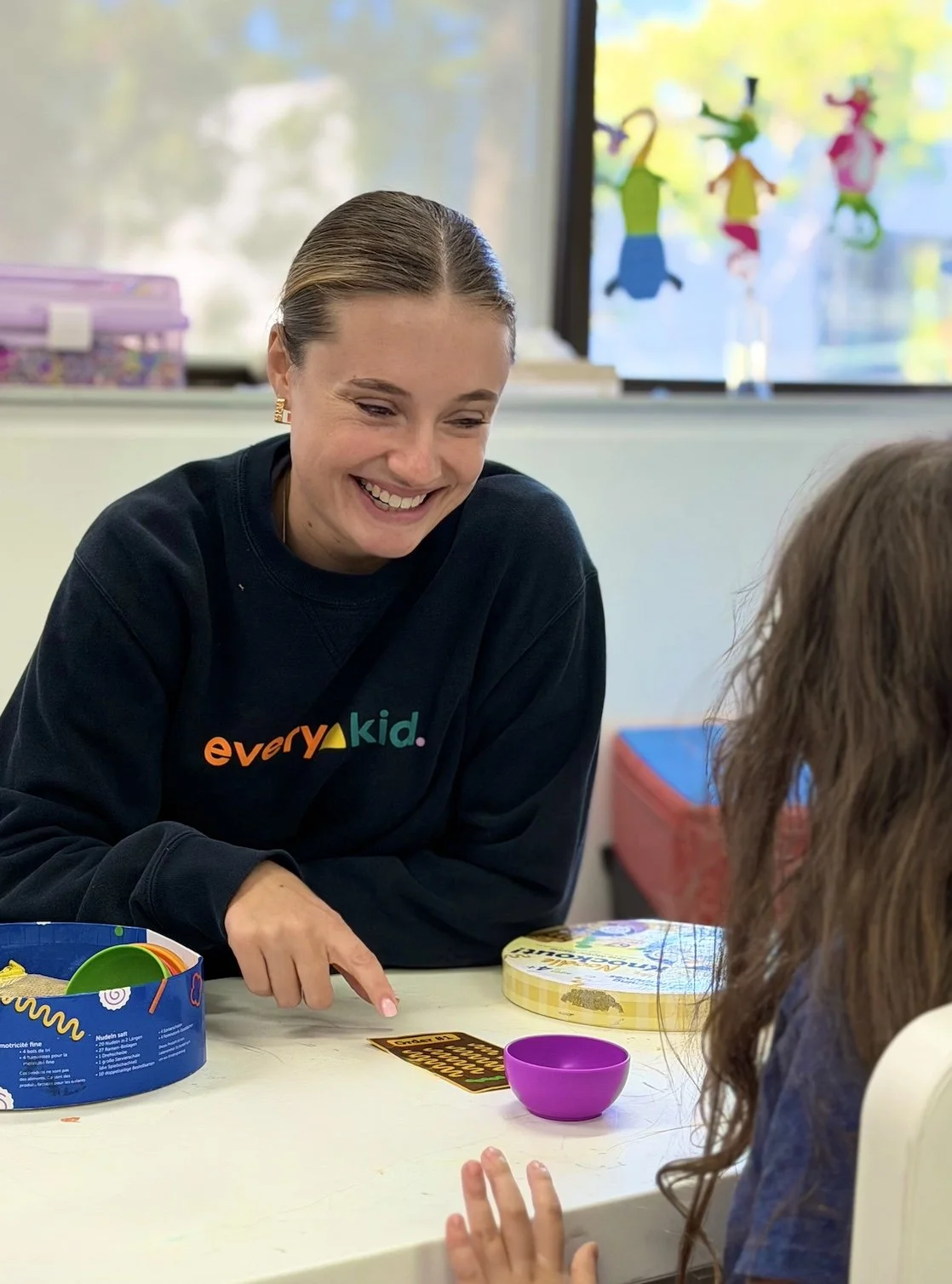
Sessions look different depending on the child's age and goals, but they're almost always play based. Children don't sit still and work through exercises; they climb, build, create, and move through activities that are genuinely engaging.
Behind the scenes, your OT is observing how your child processes sensory input, plans and sequences movement, manages frustration, and approaches challenges. Every activity has a purpose.
At EveryKid, your first session is focused on getting real answers. We use a dedicated assessment approach to identify the root causes of your child's daily challenges – not just the surface behaviours – so that every session after that is built on a clear, specific plan. You'll also leave with at least one practical strategy you can start using at home that same day.
Where it makes sense, our OT team works alongside our physiotherapy team. Gross motor skills, sensory processing, and coordination often overlap, and having both disciplines under one roof means your child gets a complete picture.
Wondering whether occupational therapy for kids could help your child?
Our paediatric OT team in Parramatta sees children of all ages, no referral needed. Call us on 0404 939 490 or book an appointment online.