
Beyond the Canvas: What Art Therapy Actually Is (And Why Your Child Might Need It)
You’ve probably heard ‘art therapy’ and thought: is that just painting? How is making a collage going to help my kid? Couldn’t I just do that at home with them?
Fair. Let’s clear that up fast.
Art therapy is not an art class. It’s a structured, evidence informed clinical approach delivered by a therapist trained in psychology, neuroscience and child development. The art is the method, not the point. What matters is what happens during the making.
So what actually is art therapy?
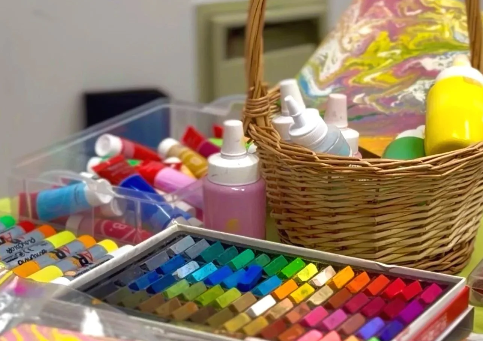
Art therapy uses creative mediums like paint, clay, collage, sculpting as a clinical tool to help children process emotions, experiences and relationships. Just like our OTs use swings to help our kids process vestibular information or our physios use the stairs to strengthen the legs, the tool chosen in art is specific and so is the intention behind it.
For kids who struggle with traditional talk therapy, it offers something different: a way to communicate that doesn’t rely on words. Because children often communicate through symbols and actions long before they can verbalise complex feelings, art therapy works in that vital, early developmental space.
Most parents describe the same scene. Something hard comes up, they try and talk it through and their child just…leaves. Not physically sometimes. But they’re gone. That’s not defiance. That’s a nervous system that has hit its limits. Art therapy was built exactly for that moment. It works in that gap - the space between what a child feels and what they can say.
What does an art therapy session actually look like?
A lot of parents picture their child sitting at a table being handed a paintbrush and told to ‘express themselves’. Rather, every session has 3 distinct phases and each one has a clinical purpose.
Neurological Contributors
We get them present in the room (regulation): Kids carry a lot when they come through the door. A hard day at school, a meltdown in the car on the way over, the general weight of a kid who feels everything very loudly. So we start with something tactile in their hands. Foam clay. Sensory sand.
We know that touching, pressing and squeezing sends a direct signal to the nervous system that it’s safe to settle. It’s the same reason fidget toys work. When the hands are busy, the brain stops scanning for threats and starts becoming available.
Observation of process & identification of patterns through creative exploration: The therapist introduces a specific activity based on your child’s goals. An inside out collage for social anxiety. Paint pouring for emotional regulation. Nothing is chosen randomly.
But the activity is only half of it. The therapist is trained to read the process. How hard does your child press? What do they avoid? Where do they get stuck? These are the same patterns showing up at home and at school. Art just makes them visible in a way that’s safe enough to work with.
This is called symbolic communication and it bypasses the part of the brain that shuts down under pressure.
Cognitive integration: The final phase is about taking the insight and making it useful. We walk through what was created together. We name what came up. Then we build a concrete strategy directly from what we’ve observed.
That’s cognitive integration. The brain connecting a creative experience to a real life application. And that connection is what makes sure the progress follows them out the door.
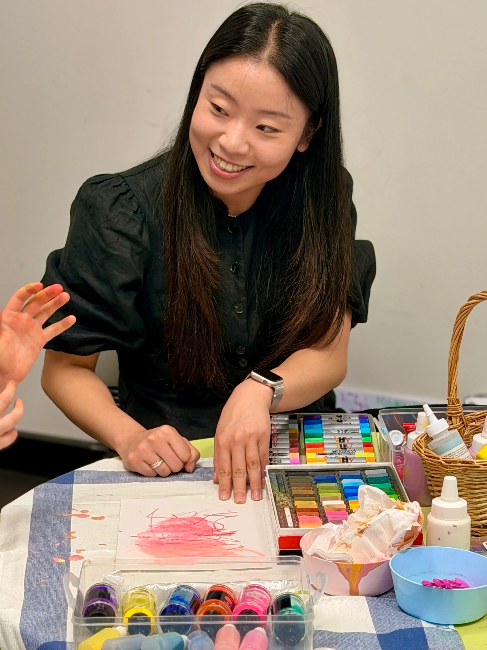
How Art Therapy Supports Development: The Science Behind the Art
We aren't looking for vague "’improvement’; we are targeting specific developmental markers. Research in neurodevelopment and art therapy shows clear, functional shifts in how a child operates.
Here is how the creative process translates into the real-world results parents notice:
Improved Communication and Self-Expression
The Science: For children with limited verbal output or those who shut down under pressure, art acts as a direct communication bypass. It allows them to externalise internal states using symbolic language, providing a window into their experience that speech can’t reach.
Increased Sense of Control and Empowerment
The Science: Every artistic choice, from the pressure applied to a crayon to the selection of a medium, is an exercise in Executive Function. This builds agency, helping children who often feel "done to" by their environment to practice autonomy and cognitive control.
Reduced Stress and Anxiety
The Science: The tactile and repetitive nature of art-making (like kneading clay or rhythmic painting) triggers the parasympathetic nervous system. This lowers cortisol levels and moves a child out of a fight-flight state and into a rest-and-digest state where learning can actually occur.
Enhanced Social Skills and Friendships
The Science: In a group setting, art becomes a tool for Social Cognition. Sharing space and materials allows children to observe others' work and collaborate through a "third object" (the art), which is often less intimidating than direct face-to-face interaction.
Improved Fine Motor Skills and Sensory Integration
The Science: Art is a controlled sensory experience. Manipulating resistant materials like wire or heavy clay directly supports motor planning and precision, aiding the same bilateral integration goals seen in OT while helping to desensitize sensory defensiveness.
Boosted Confidence and Cognitive Integration
The Science: Creating a physical object allows a child to "see" their progress. This externalisation helps them organise fragmented thoughts and builds a sense of self-competence that is visible and permanent, rather than just an abstract feeling.
Who tends to get the most from it?
We look at art therapy through the lens of developmental needs rather than specific diagnoses. It is suitable for children from early childhood through to adolescence, particularly those who:
Experience anxiety or frequent emotional overwhelm
Have difficulty regulating their behaviour
Are neurodivergent and process the world visually or sensorially
Have experienced trauma, grief or significant family change
Struggle with self-confidence, identity or expressing distress
Appear withdrawn, "shut down," or express distress through behaviour rather than words.
Have tried talk based therapy and hit a wall
Why Art Therapy isn’t just another line item
Each therapy in your child’s plan targets a different pathway towards their goals. Psychology works top down targeting thoughts. OT works on the body. Speech targets communication.
Art therapy works differently to all of them. It accesses sensory, visual and symbolic pathways - the ones that feel natural and safe to a child.
Art therapy is not a luxury add on. It can be an important entry point to therapy and a shake up to get things moving again when traditional therapy has plateaued. A child who is too shut down to engage with an OT or can’t process what the psychologist is saying often responds to art therapy. Because it meets them where they are.
Not every child needs art therapy. But for the ones who do, it can be the thing that finally shifts something. We’d love to help you figure out if your child is one of them. Come and have a chat with us and we’ll tell you honestly whether art therapy is the right fit.
Visit our bookings below or, if you’re not exactly sure what you’re after, fill out an enquiry form.
For more general info on Art Therapy at EveryKid, head over to our the service page here: Art Therapy
