
How Music Therapy Supports Children's Development & Communication
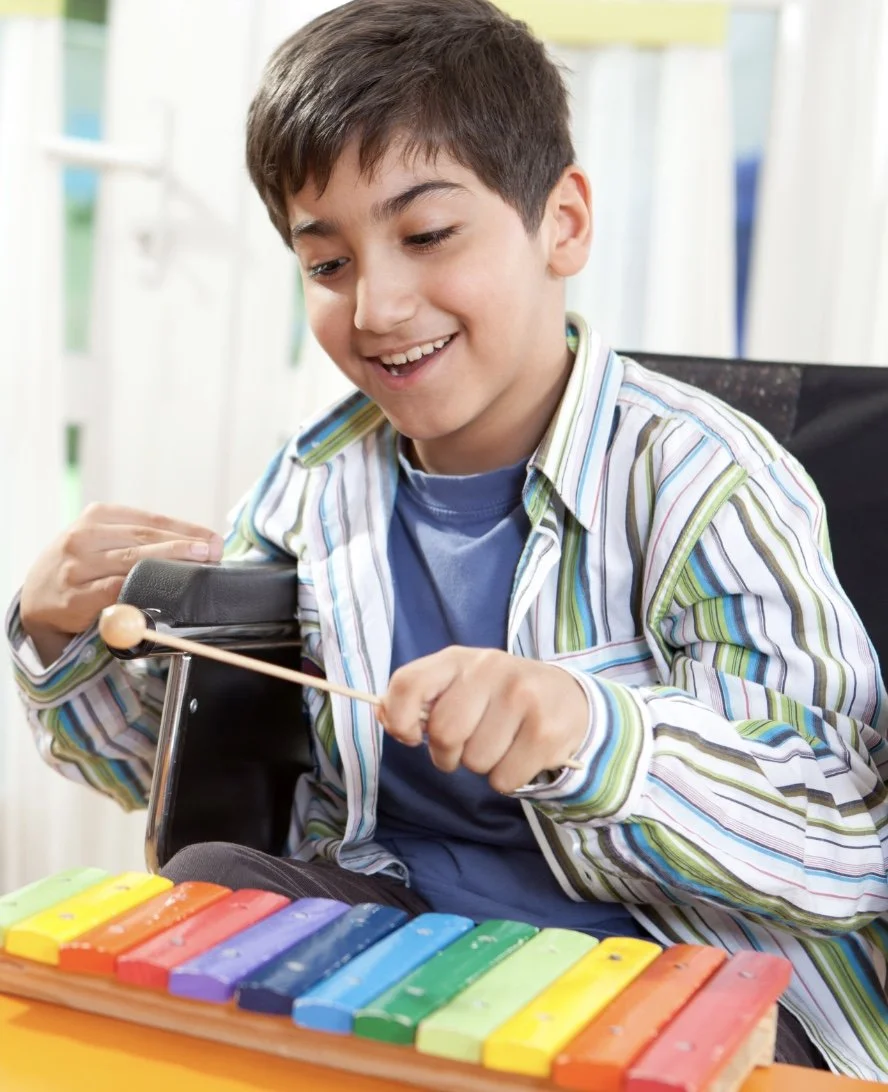
The benefits of music therapy for children go further than most parents expect. It's not about learning to read sheet music or perform at a recital (although that can come with it). For kids with communication delays, emotional regulation difficulties, or autism, music is actually a clinical tool – and one that makes an incredible difference.
Here's what it involves, what the research shows, and how your family can access it through the NDIS.
Why Music Reaches the Brain Differently
The developing brain responds to rhythm before it responds to language. Before a child can follow multi step instructions, sit through a classroom lesson, or hold a conversation, they're already tracking beats and patterns. It's one of the earliest things the brain learns to do.
This matters because it means a music therapist can sometimes reach children in ways other approaches can't. A child who struggles to say certain words may be able to sing them. A child who shuts down during traditional therapy may stay fully engaged with a drum or a melody.
Music is also the only stimulus that activates both hemispheres of the brain simultaneously – which is why rhythm based techniques are used in neurological rehabilitation worldwide, not just paediatric settings.
None of this is alternative or experimental. Registered Music Therapists (RMTs) complete a degree level qualification and are registered with the Australian Music Therapy Association (AMTA). At EveryKid, all of our music therapists hold full RMT registration.
What the Research Shows
Studies consistently support music therapy across several key developmental areas:
Autism and social communication: Structured music activities have been shown to improve joint attention, social interaction, and verbal communication in children on the spectrum. The predictable nature of music creates a safe framework for social engagement – something less structured environments often don't offer.
Language development: Melodic intonation techniques – adapted from adult neurological rehabilitation – help children with speech delays access language through a musical pathway when direct speech practice feels frustrating.
Emotional regulation: Rhythm based interventions help children identify and manage their emotional states. This is particularly useful for kids who struggle with transitions or unexpected changes.
Attention and executive function: Following musical patterns builds the same cognitive skills used for multi step instructions and turn taking, two areas that are often difficult for children with ADHD or developmental delays.
What Happens in a Music Therapy Session
A music therapy session isn't structured like a music lesson. The therapist isn't trying to get your child to the end of a song – they're using rhythm and sound as tools to target specific goals.
At EveryKid, sessions work across four areas depending on your child's needs:
Rhythmic Entrainment
A steady, grounding beat helps your child find physical rhythm and coordination. Over weeks, parents often notice this starting to show up as a smoother, more settled movement at home.
Auditory Grounding
Specific sounds and frequencies prime the nervous system, helping your child filter out background noise more effectively. For kids who find noisy environments overwhelming, this can make a real difference to how they function day to day.
Melodic Intonation
Rhythm, melody, and intonation are used together to build communication pathways – particularly useful for children with language delays who find traditional speech practice difficult or frustrating.
Pattern Recognition
Musical structure is used to practise turn taking and following multi step instructions: the kind of cognitive skills that matter in the classroom and in social settings.
Progress doesn't look dramatic after a single session. Over weeks and months, though, parents regularly notice changes in how their child communicates, regulates, and connects with others.
Using NDIS Funding for Music Therapy
Music therapy NDIS funding is available for eligible children through a registered provider. EveryKid is a registered NDIS provider (Registration No. 4-KDF1o1N), and music therapy typically sits under the Capacity Building – Improved Daily Living budget.
Plan goals that commonly support music therapy NDIS funding include:
Communication
Social participation
Emotional regulation
Daily living skills
If you're working with a support coordinator, let them know you're looking for NDIS registered music therapy with a qualified RMT in Parramatta. They'll help make sure the right budget category is used.
One thing worth knowing: Capacity Building funding is locked to its category, so it can't be shifted to other support types. It's worth checking before your plan review that your therapy budget is sized correctly for what your child actually needs.
Not sure whether your child's current plan covers it? Our admin team can help you work through the options.
Searching for Music Therapy Near Me?
If you've been looking for music therapy near me in Western Sydney, EveryKid is one of the only NDIS-registered paediatric music therapy providers in the region with a fully integrated therapy team under one roof.
We're based at 8/142 James Ruse Drive, Parramatta, with onsite parking. We see families from Parramatta, Westmead, Merrylands, Baulkham Hills, Penrith, Blacktown, and surrounding suburbs. Clinic hours are Monday to Friday 7:00am – 6:30pm, with Saturday morning sessions available.
Finding music therapy near you is one thing. Finding it as part of a team that can connect it directly to your child's speech, OT, or behaviour goals is another. That's what we're set up to do.
Discover the Benefits of Music Therapy for Children
The benefits of music therapy for children are often most visible when it's part of a connected approach – tied to the other therapy your child is receiving and linked to goals that carry through each plan year.
If you'd like to find out whether it's the right fit for your child, visit our music therapy page or get in touch directly.
📞 0404 939 490 | ✉️ hello@everykid.com.au
Open Monday to Friday 7:00am – 6:30pm, Saturdays 8:00am – 12:00pm.